
The two roles hiding behind a single payment button
When someone clicks the payment button in an online store, it looks like everything happens at once. They enter their card details, wait a few seconds, and see a payment confirmation screen. Done. But behind those few seconds, several systems move in sequence. And two of the most commonly confused parts are the payment gateway and the payment processor.
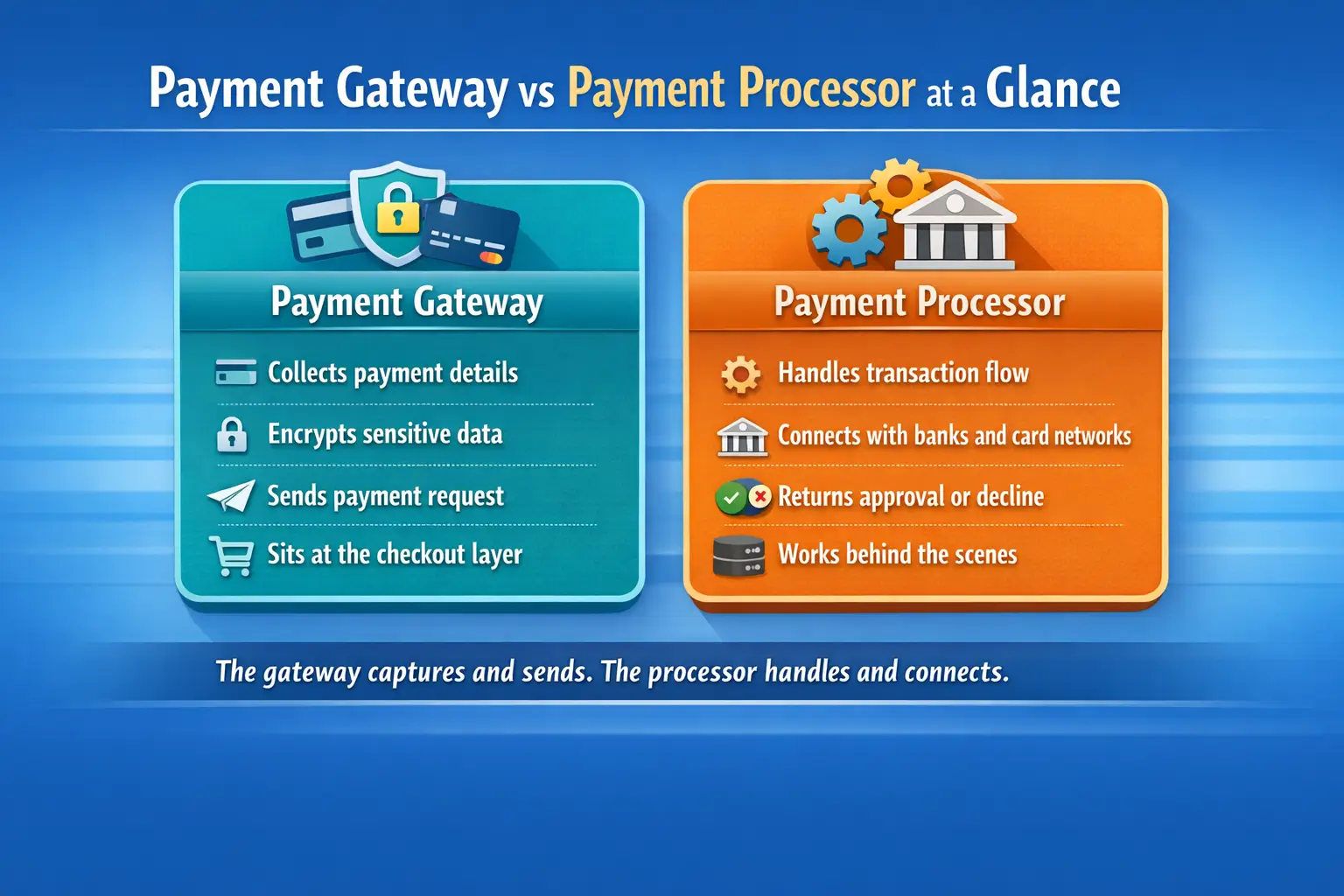
They sound similar, but they are not the same thing. Both can be essential in online payments, but they do different jobs. Put simply, a payment gateway is the secure front door that collects and sends payment information, while a payment processor is the system behind the scenes that helps the transaction move through the financial network and get approved.
Once you understand that difference, online payments stop feeling like a black box. The whole system starts to look less like a button and more like a layered structure where customer experience and financial infrastructure meet.
What is a payment gateway?
A payment gateway is responsible for collecting payment information securely and transmitting it safely. It is the entry point of an online payment.
When a customer enters card details such as the card number, expiration date, and CVC on a website or app, that data cannot simply move around unprotected. It is sensitive financial information. This is where the payment gateway comes in. It encrypts the data, routes it correctly, and connects the merchant’s checkout page with the broader payments system.
A simple way to think about it is this: in a physical store, the card terminal reads the card and sends an authorization request. In online payments, the gateway plays a similar role.
Key functions of a payment gateway
- Collecting payment details
- Encrypting and securing payment data
- Sending the authorization request
- Connecting the checkout experience to the payments system
What is a payment processor?
A payment processor is responsible for handling the transaction after the payment request has been initiated. It helps move that request through the financial system.
If the gateway opens the door, the processor takes the request further and makes sure it reaches the right place. It communicates with card networks, acquiring institutions, issuing banks, and other parts of the payments chain to determine whether the transaction should be approved or declined.
Most customers never see the processor directly. It operates in the background. While the shopper only sees a checkout screen, the processor is doing the work of checking whether the card is valid, whether funds or credit are available, and whether anything about the transaction looks suspicious.
Key functions of a payment processor
- Handling the authorization request
- Communicating with card networks and banks
- Returning approval or decline responses
- Running the transaction flow behind the scenes
Payment gateway vs payment processor at a glance
| Category | Payment Gateway | Payment Processor |
|---|---|---|
| Main role | Collects and securely transmits payment data | Processes the payment request through the financial network |
| Position in the flow | Front-end checkout layer | Back-end transaction layer |
| What the customer notices | Payment form, checkout experience, secure submission | Usually invisible, but affects whether the payment goes through |
| Simple analogy | Online card terminal | Payments engine |
| Core function | Encryption, transmission, security | Authorization, communication, processing |
How an online payment actually works
The easiest way to understand the difference is to follow the payment flow.
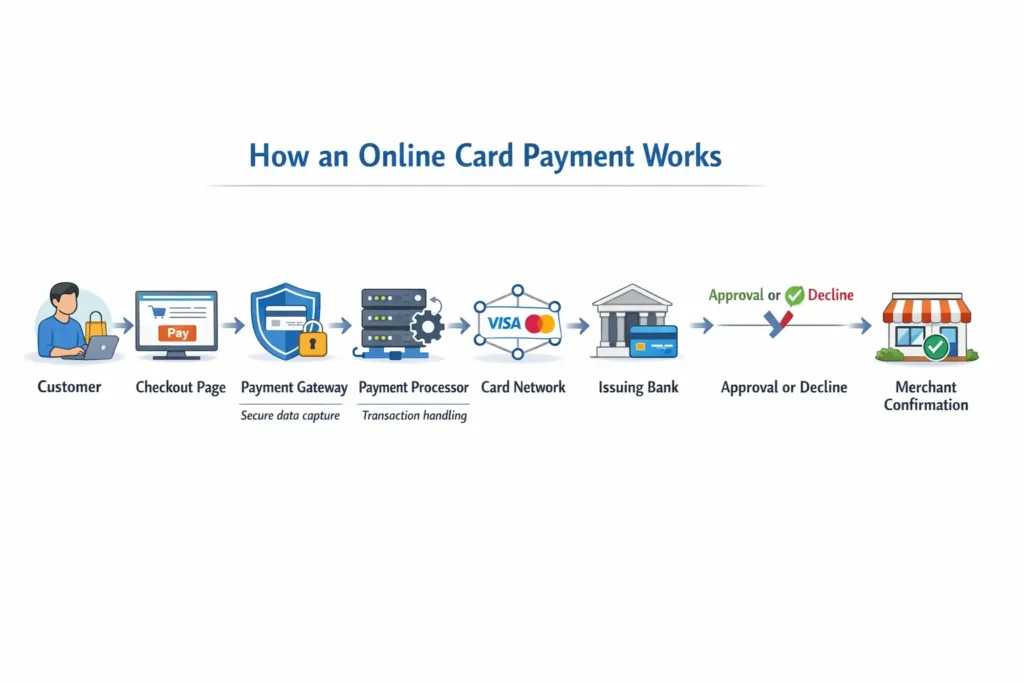
A typical online card payment flow
- A customer enters card details at checkout.
- The payment gateway securely collects that information.
- The gateway sends the payment request to the payment processor.
- The processor sends the authorization request through the relevant card network and banking channels.
- The issuing bank decides whether to approve or decline the transaction.
- The response returns through the processor.
- The result is displayed on the merchant’s checkout page through the gateway.
The customer only sees a short message such as “payment successful,” but in reality the gateway and processor have been doing different jobs at different points in the same flow.
Why do people confuse them so often?
The confusion usually comes from one thing: many modern payments companies offer both functions together.
For merchants using services like Stripe, PayPal, or Adyen, it may feel like they are buying one single payment product. That is why the question comes up so often: is this a gateway, or a processor? In many cases, the answer is both. A provider can offer gateway functionality and processor functionality together. But that does not mean the two roles have become identical.
Even when a product looks integrated, the functions are still conceptually separate.
Why both matter in online business
Payments are not just about collecting money. If the payment experience feels awkward, customers abandon carts. If the security feels weak, trust disappears. If transaction handling is unreliable, revenue leaks out.
The payment gateway is closer to the customer-facing payment experience. It affects how natural the checkout feels, how smoothly payment details are entered, and how secure the process appears. The payment processor is closer to the actual execution of the payment. It affects the approval path, the connection to financial networks, and the operational handling of the transaction.
In other words, the gateway manages the front door of the payment, while the processor helps move the payment through the system. One is closely tied to experience. The other is closely tied to execution.
The simplest one-sentence explanation
A payment gateway securely captures and sends payment information.
A payment processor moves that transaction through the financial system so it can be authorized and handled properly.
What becomes clearer once you understand the difference
Once you separate these two roles, online payments become easier to understand. What many people casually call “the payment system” is actually a structure made up of different layers.
Payments are not just one action. They involve data entry, security, transmission, authorization, and response. And among all those layers, the two most commonly mixed up are the payment gateway and the payment processor.
If you want to understand how digital payments work, this is one of the best places to start.
Final thoughts
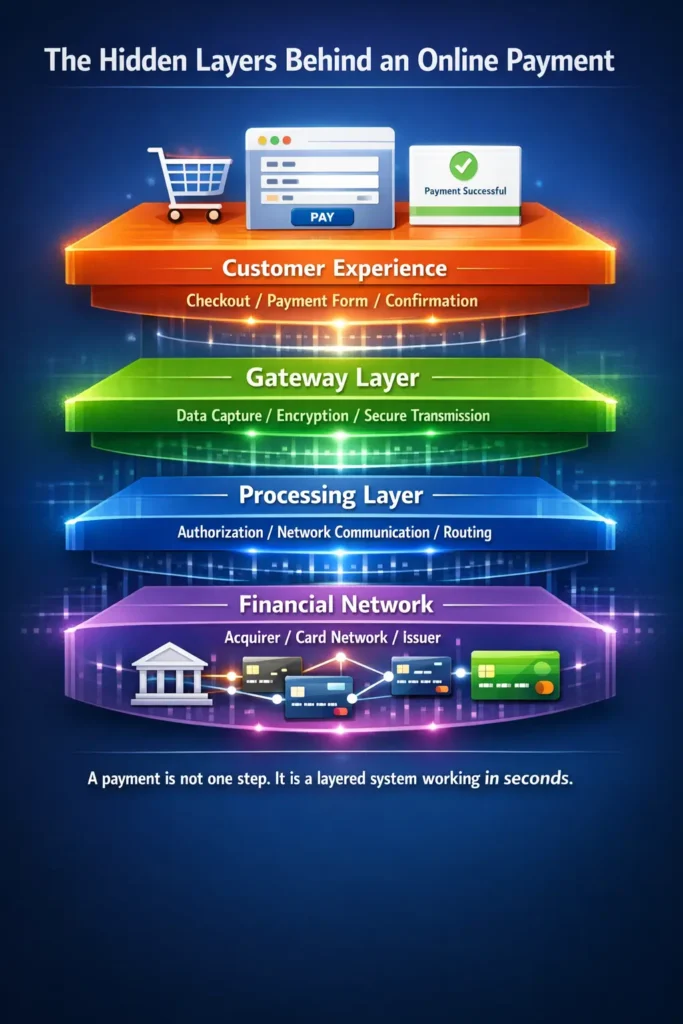
Online payments are more structured than they first appear. Customers see a checkout page, but behind that simple interface there are separate layers for handling payment data securely and moving transactions through the financial system.
The payment gateway opens the door. The payment processor moves the payment forward.
That one line captures the difference clearly. And once you remember it, the question of payment gateway vs payment processor becomes much easier to understand.
